
A Satirical Economic Analysis
Javid Shirazi
Why we oppose ending sanctions on Iran?
📌 Executive Summary
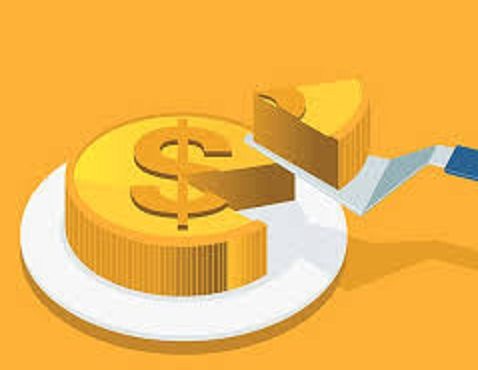
Akhbaremali( Financialnews). In this satirical piece, eleven key players from across the global economic spectrum—from Chinese refiners and Indian shadow-fleet owners to British pension funds, Turkish hoteliers, Gulf investors, Iranian rent-seekers, and an Israeli corridor developer—explain why they oppose the Iran-U.S. agreement. Their arguments reveal a common thread: the Iran sanctions regime has evolved into a multi-billion-dollar global industry, and those who have built their businesses around it are determined to protect their interests—even at the expense of peace and ordinary people.
📰 Introduction
Financial and Monetary News – In these critical days, when news of the Iran-U.S. understanding and the possibility of lifting sanctions against Iran has filled the media, we are faced with a fundamental question: Is this agreement and the lifting of sanctions truly in the interest of the global economy and people?
Our answer, as a group of international economic activists, is definitely… no.
Below, we present our reasons for the audience to judge.
🗣️ The Voices of Eleven Stakeholders
- Shi Chengjin – Financial Manager, Chinese Refinery (Private “Teapot” Refinery)
📍 Location: Shanghai, China
📊 Sector: Purchasing Iranian oil and refining it for the Chinese domestic market
“As the financial manager of one of China’s private refineries, I am responsible for securing plant feedstock at the lowest possible cost. During the sanctions era, we managed to supply over 90% of our crude oil needs from Iran with deep discounts of $5 to $15 per barrel. This translates to annual savings of nearly $10 billion for China’s entire refining industry. With the lifting of sanctions, oil prices will normalize, and we will not only lose these discounts but also have to compete with European and Japanese refineries. This means higher production costs, lower profit margins, and ultimately higher fuel prices for Chinese consumers. In my view, this agreement is not only an economic disaster for China’s refining industry but also for the global commodities market.“
Estimated Loss: At least $10 billion in annual savings will be lost.
- Ashwan Bihari Pinad Singh – Owner, Indian Tanker Fleet (Shadow Fleet)
📍 Location: Mumbai, India
📊 Sector: Transporting Iranian crude oil using tankers flying flags of Panama, Liberia, and Malaysia
“I own 12 large tankers that have been responsible for transporting Iranian crude to China and other destinations in recent years. This is a multi-billion-dollar industry from which I and hundreds of other tanker owners in India, Greece, and the UAE make our living. Each shipment brings us hefty fees, and the high risks of sanctions circumvention have multiplied these fees. With the lifting of sanctions, this industry will collapse or be severely weakened, leaving our market dependent on sanctioned Russia—which itself has numerous tankers and lacks direct access to warm waters for its oil exports. Our tankers will sit idle, our management companies in Hong Kong and the UAE will go bankrupt, and thousands of hardworking seafarers and employees will lose their jobs. The U.S. State Department sanctioned 29 tankers belonging to our network in December 2025, but we are still active to serve the market. Lifting sanctions means the end of our business.”
Estimated Loss: The collapse of an industry with a turnover of tens of billions of dollars.
- William Cadman Swan – CEO, British Investment Fund
📍 Location: London, UK
📊 Sector: Investing in tourism, real estate, and financial services in Turkey and the UAE
“Our pension fund, which belongs to millions of British workers and retirees, has channeled significant capital into tourism and real estate sectors in Turkey and the UAE during the sanctions era. These investments have so far yielded high returns due to the relative market monopoly and the absence of a competitor like Iran, with profits going to our retirees. With Iran’s return to the global market, capital will flow out of these projects and toward Iran—with its 90-million population, educated and cheap labor force, and vast energy resources. This means lower returns for our fund and consequently reduced income for millions of British retirees. My duty is to protect shareholder interests, regardless of what peace in the Middle East is called.“
Estimated Loss: Reduced returns on multi-billion-dollar investments in Turkey and the UAE.
- Alpay Osman Ocakoglu – CEO, Major Turkish Tourism Company
📍 Location: Istanbul, Turkey
📊 Sector: Attracting tourists and regional investors
“Turkey’s tourism industry has become heavily dependent on Iranian tourists in recent years. Due to sanctions, Iranians traveled to Turkey instead of Europe, spending billions of dollars annually in our hotels, restaurants, and shopping centers. Also, Iranian investors, instead of investing inside Iran, transferred their money to Turkey and invested in real estate and services. With the lifting of sanctions, Iranian tourists will travel to Europe and other destinations, and investors will return to Iran. This means a 50% drop in our revenue and unemployment for thousands of tourism industry employees. As the CEO of a major tourism company, I cannot accept this disaster.”
Estimated Loss: Billions of dollars in reduced revenue for Turkey’s tourism and real estate sectors.
- Abdullah Mukarrar bin Farah – Board Member, Investment Company in Dubai
📍 Location: Dubai, UAE
📊 Sector: Financial and commercial hub for Iranian companies and sanctions circumvention
“During the sanctions era, Dubai became a paradise for Iranian companies. Thousands of Iranian firms have registered in Dubai’s free zones, using this city as a base for imports, re-exports, and banking. We earn billions of dollars annually from these transactions. With the lifting of sanctions, these companies will return to Iran, close their offices, and withdraw their capital from the UAE. This means a sharp decline in real estate, financial services, and tourism revenues for Dubai. As an investment company, we will lose a large portion of our portfolio, and our investors will suffer huge losses. I cannot tell my shareholders that peace has halved the value of their shares!? Peace should increase our share of profits from the Iran-U.S. conflict, not diminish it. “
Estimated Loss: Billions of dollars in reduced revenue from Iran-related transactions.
- Abdulaziz bin Mansour Khazraji – Senior Executive, Saudi Oil Company
📍 Location: Riyadh, Saudi Arabia
📊 Sector: Crude oil production and export
“As one of the senior executives of Saudi Arabia’s oil company, I know well that Iran’s return to the oil market is the biggest threat to our oil revenues. According to the World Bank report, Iran’s return would reduce oil prices by 13%. This means a $55 billion annual revenue loss. With this revenue drop, mega-projects like NEOM and other Vision 2030 projects will face budget cuts, and thousands of construction and employment projects in Saudi Arabia will be delayed. We cannot allow a longtime rival to enter the market, take our share, and jeopardize our development plans. That is why we oppose the economic changes resulting from the lifting of Iranian oil sanctions.”
Estimated Loss: At least $55 billion in annual revenue loss (based on the World Bank report).
- Sh.K. – Manager, Major Exchange Office in Iran
📍 Location: Tehran, Iran
📊 Sector: Buying and selling foreign currency at different rates (free market and NIMA)
“For years, I have been active in Iran’s currency market, earning huge profits from the wide gap between free market and NIMA rates, as well as from transferring revenues derived from energy rent. During the sanctions era, foreign exchange resources were limited, and the government provided subsidized currency (at 4,200 tomans) to importers for essential goods, while the rest of the demand was directed to the free market (at rates exceeding 50,000 tomans). This gap was a major source of profit for me and other exchangers. With the lifting of sanctions and increased currency supply, the free market rate will converge with the NIMA rate, and this multi-tens-of-thousands-of-billions-toman rent will disappear. Moreover, with the lifting of sanctions, banks will take over a large portion of my exchange office’s function for major economic sectors, forcing me to settle for petty transfers. Thus, I will lose thousands of billions of tomans in profits. This marks the end of a rent that has been the backbone of my business and many of my colleagues in the informal market for years—serving the economy and providing creative financing under heavy sanctions.”
Estimated Loss: The loss of a multi-tens-of-thousands-of-billions-toman currency rent.
- M.N. – CEO, Trading Company Specializing in Sanctions Circumvention
📍 Location: Istanbul, Turkey (with offices in Dubai and Hong Kong)
📊 Sector: Importing essential goods, medicine, and industrial parts into Iran through intermediary services
“My company has become one of the largest importers of goods into Iran during the sanctions era. Using a network of shell companies in Turkey, the UAE, and Hong Kong, we supplied Iran’s needed goods, and for this service to the people, we proudly charged only 8 to 10 percent commission on the value of shipments! The annual value of these imports is billions of dollars, and our profit from this business has been hundreds of millions of dollars annually. With the lifting of sanctions, Iranian importers can directly purchase from foreign producers and will no longer need our intermediation. This means disregard for the honest services of me and my peers, the weakening of this business, and consequently, the unemployment of hundreds of my employees in four different countries. This is neither fair nor ethical.”
Estimated Loss: The collapse of a hundreds-of-millions-of-dollars business.
- R.B.A. – Fuel Smuggler on Iran’s Borders
📍 Location: A coastal border region of Iran
📊 Sector: Smuggling subsidized Iranian fuel
“For years, I have been smuggling oil and diesel using the price difference between fuel in Iran and global markets. In Iran, each liter of gasoline is sold at a subsidized price of about 3,000 tomans (roughly 5 cents), while globally, you cannot find gasoline below $1.5. This difference is a major source of income for me and thousands of smugglers, boat and truck owners, and ordinary people in border areas. The annual value of fuel smuggling from Iran is estimated at $2.5 to $4 billion*. With the lifting of sanctions and increased foreign exchange revenues, the Iranian government could remove subsidies and bring fuel prices closer to global levels. This would eliminate the price gap and end my business. I am not saying I oppose fuel price hikes! I am saying I oppose the abrupt elimination of the price gap, which would leave thousands of economic actors and families without alternatives.“
Estimated Loss: The loss of a multi-billion-dollar income source for the smuggling network.
- G.R.M. – Tribal Chief in Pakistan’s Balochistan
📍 Location: Balochistan Province, Pakistan (near the Iran border)
📊 Sector: Controlling fuel and goods smuggling routes from Iran and receiving a share from smugglers
“As the chief of one of the major tribes in Pakistan’s Balochistan, I control several smuggling routes for fuel and goods from Iran to Pakistan. Smugglers using these routes pay me and my tribe substantial annual sums as ‘passage fees’. This income is the main livelihood source for thousands of families in my tribe. With the lifting of sanctions and the likely removal of fuel subsidies in Iran, fuel prices in Iran will approach global levels, and the price gap will disappear. Consequently, fuel smuggling will no longer be economically viable, and these routes will shut down. Beyond losing our passage fee income, the elimination of the price gap will also threaten the food security of millions of people in Pakistan and Afghanistan, who depend on cheap essential goods imported from Iran.”
Estimated Loss: Loss of income and essential goods supply for several tribes in the border regions of Pakistan and Afghanistan.
- Haran Ben Porat Shalom – Investor and Chairman, IMEC Corridor Development Fund
📍 Location: Haifa Port, Israel
📊 Sector: Attracting investment for the India-Middle East-Europe Corridor (IMEC) project
“I am the senior manager of an investment fund based in Eilat, responsible for attracting international capital for the massive IMEC corridor project. This corridor, connecting India, the UAE, Saudi Arabia, Jordan, and Israel, is meant to replace Iran’s transit routes and permanently exclude Iran from the region’s economic equations. We have already succeeded in attracting over $5 billion** from European, Indian, and American investment funds for this project, and we plan to secure the full **$20 billion cost of this corridor by 2030.
However, the lifting of sanctions against Iran poses the greatest threat to this major investment. By reviving the North-South Corridor and expanding access to the ports of Chabahar and Bandar Abbas, Iran can offer a route that is 40% shorter and 30% cheaper than IMEC. This means our investors will face a natural and historical rival instead of investing in a project designed to exclude Iran—one that drastically reduces transportation costs and undermines the viability of alternative routes.
In Israel, we have designed the dream of a ‘New Middle East’ without Iran and have spent billions of dollars over the years to realize it. Lifting sanctions would turn this dream into a nightmare and destroy investor confidence in our regional projects. I cannot tell my shareholders that a diplomatic agreement has put their $5 billion investment at risk of collapse.
That is why my colleagues and I in Israel are lobbying with full force in the U.S. Congress, the European Parliament, and, of course, mainstream media to prevent any agreement that would allow Iran to return to transit corridors. For us, this is not just a political issue; it is a matter of economic survival.”
Estimated Loss: At least $5 billion* in attracted capital at risk, the loss of the $20 billion IMEC investment outlook, and the failure of Israel’s project to become the region’s energy and goods hub for Europe.
📊 Summary Table: Interests at Risk for Eleven Key Players
| # |
Stakeholder |
Location | Interests at Risk | Approximate Loss |
| 1 |
Chinese Refinery Financial Manager |
Shanghai, China | Loss of $5–15/barrel discount on Iranian oil |
$10 billion in annual savings |
| 2 |
Indian Tanker Owner (Shadow Fleet) |
Mumbai, India | Collapse of Iranian oil shipment industry |
Tens of billions in annual turnover |
| 3 |
British Investment Fund CEO |
London, UK | Reduced returns on investments in Turkey & UAE |
Billions in fund profit loss |
| 4 |
Turkish Tourism Company CEO |
Istanbul, Turkey | Decline in Iranian tourists and investors |
Billions in annual revenue loss |
| 5 |
Dubai Investment Company Board Member |
Dubai, UAE | Reduced financial and trade transactions with Iran |
Billions in revenue loss |
| 6 |
Saudi Oil Company Senior Executive |
Riyadh, Saudi Arabia | Lower oil prices and market share loss |
$55 billion in annual revenue loss |
| 7 |
Iranian Exchange Office Manager |
Tehran, Iran | Loss of multi-tier currency rent |
Tens of thousands of billions in tomans |
| 8 |
Sanctions-Circumvention Trading CEO |
Istanbul, Turkey | Collapse of import intermediation business |
Hundreds of millions in annual profit |
| 9 |
Fuel Smuggler on Iran’s Borders |
Coastal Iran | Loss of subsidized fuel price gap |
$2.5–4 billion in annual smuggling value |
| 10 |
Balochistan Tribal Chief |
Balochistan, Pakistan | Loss of passage fee income and essential goods supply |
Millions in annual tribal income |
| 11 | Israeli Investor & IMEC Fund Chairman |
Haifa, Israel |
Collapse of IMEC corridor project and investment appeal |
$5 billion in attracted capital at risk |
🧠 Key Findings
- The “sanctions industry” is global:From Chinese refiners to Israeli corridor developers, a diverse coalition of actors has built lucrative businesses around Iran’s isolation.
- Peace is profitable—but not for everyone:The Iran-U.S. agreement threatens to dismantle a multi-billion-dollar ecosystem of rent-seeking, smuggling, intermediation, and geopolitical speculation.
- Ordinary people are shields:Each stakeholder invokes the welfare of workers, retirees, or border communities to justify their opposition—while their real concern is their own bottom line.
- Satire reveals truth:By presenting these arguments in their own words, the piece exposes the cynical logic behind the opposition to sanctions relief.
💎 Final Statement
We, the authors of this text, know one thing well: Iran’s sanctions are not a policy but an international industry that has been cultivated for nearly half a century, evolving into an economic system. For this reason, it cannot and should not be dismantled so easily.
The recent agreement and the lifting of sanctions against Iran are our red line.
📝 Note
This article is a satirical piece. The names, positions, and statements are fictionalized representations of real economic interests.
🏷️ Keywords
- Iran sanctions relief
- Iran-U.S. agreement
- Sanctions rent-seeking system
- Shadow economy
- Shadow fleet (sanctions-busting tankers)
- Currency rent (multiple exchange rates)
- Financial & trade hubs (Dubai, Istanbul)
- IMEC corridor
- Fuel and goods smuggling
- European pension funds
- Chinese oil discounts
- Bitter economic satire
- Losers of sanctions relief
- Peace vs. profitability
📎 Suggested Citation
“Why I Oppose the Iran-U.S. Agreement: A Satirical Economic Analysis.” Akhbaremalinews(Financial and Monetary News) June 2026. [Online]
📩 For feedback or collaboration: [Iranpo@gmail.com]
برچسب ها :Bitter economic satire ، Financial & trade hubs (Dubai ، Fuel and goods smuggling ، IMEC corridor ، Iran sanctions relief ، Iran-U.S. agreement ، Istanbul) ، Losers of sanctions relief ، Peace vs. profitability
- نظرات ارسال شده توسط شما، پس از تایید توسط مدیران سایت منتشر خواهد شد.
- نظراتی که حاوی تهمت یا افترا باشد منتشر نخواهد شد.
- نظراتی که به غیر از زبان فارسی یا غیر مرتبط با خبر باشد منتشر نخواهد شد.


ارسال نظر شما
مجموع نظرات : 0 در انتظار بررسی : 0 انتشار یافته : 0