
Trust Infrastructure:
Javid Shirazi
The Key to Iran’s Entry into the $۱۰۰ Billion Carbon Market
–ifnn -The global carbon market in 2026 has split along a quality divide, with high-rated credits trading at four to five times the price of low-rated ones. Without measurement, documentation, and structuring infrastructure, Iran cannot convert this potential into a tradable cash flow—even with projects and demand in place.
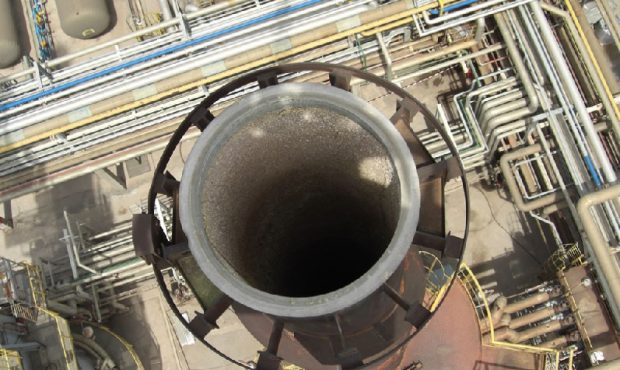
Iran burns a substantial volume of associated petroleum gas in its flares every year. International statistics place Iran among the world’s leading countries in flaring, and the capacity to capture flare gas at the start of the current administration was estimated at around 330 million cubic feet per day. An official oil industry expert states that Iran’s flaring projects have the capacity to register roughly 5 million tons of emission reductions—equivalent to $450 million in annual revenue at the current $9 price in Qatar’s GCC market. A figure striking enough to stop any investor and prompt a simple question: why has it never materialized?
The answer lies in the mechanics of the carbon market, not in its potential. The voluntary carbon market is built on “trust in verification.” Before paying, a carbon credit buyer—whether a European company with climate commitments or an investment fund—requires a documented chain: a project registered under a credible standard, an approved methodology, independent measurement by a third party, and periodic verification. Without this chain, “emission reduction” is merely a claim, not a tradable asset. The Iranian oil expert warns explicitly that one year after a flaring project becomes operational, its initial documentation can no longer be registered in carbon markets—and “none of our flaring projects have seized this opportunity.”
The global market in 2026 has split along a quality divide. According to a Boston Consulting Group survey of roughly 300 buyers, the share of retired credits rated BBB+ or higher rose from 12% in 2020 to 24% in 2025, and these credits now command prices four to five times higher than lower-rated ones. Credits carrying the CCP label (ICVCM Core Carbon Principles) saw a 227% increase in retirement volume, while the overall market contracted by 7%. This means the market is shaped not by “volume” but by “quality screening.” For Iran, this carries an uncomfortable but vital message: having a project is not enough; the ability to prove is what determines value.
Iran’s position compared with its neighbors makes this gap even clearer. Saudi Arabia has launched its voluntary market, and Qatar’s GCC serves as Iran’s only gateway to the global carbon market. Around 1,500 projects have been registered in the GCC to date. Iran has neither joined the Paris Agreement nor established a national MRV (Measurement, Reporting, and Verification) infrastructure. At the policy level, Iran’s climate governance is described as fragmented and multi-layered, and the absence of a coherent data system and transparency in carbon reporting is a primary barrier to compliance with global climate requirements. The result: immense potential, yet inaccessible without infrastructure.
Carbon revenue is an “asset,” not a “reward.” Global experience shows that projects designed from the outset with proper documentation infrastructure not only generate sellable credits but also enjoy liquidity in the secondary market. A 100 MW solar plant reduces close to 100,000 tons of emissions—equivalent to $2 million over 10 years at the current $2 price, and $10 million if the price reaches $10. But this cash flow materializes only when it is designed from day one as a “verifiable asset,” not as an “environmental claim.”
Conclusion: trust infrastructure, not the promise of potential. Iran’s carbon market is a raw opportunity. Converting it into a revenue stream requires three things: a verifiable measurement protocol, standard documentation, and legal structuring that an international investor can rely on. Until this infrastructure takes shape, the $450 million figure will remain just a number in reports. Global experience—from the explosive growth of high-quality credits to the failure of undocumented projects—carries one lesson: in the carbon market, what is sold is not “emission reduction”; it is “proof of emission reduction.“
Keywords
Voluntary carbon market , Iran gas flaring , MRV infrastructure ,| Carbon credit quality , GCC Qatar ,| Green economy
iranpo@gmail.com
برچسب ها :| Carbon credit quality ، | Green economy ، GCC Qatar ، Iran gas flaring ، MRV infrastructure ، Voluntary carbon market
- نظرات ارسال شده توسط شما، پس از تایید توسط مدیران سایت منتشر خواهد شد.
- نظراتی که حاوی تهمت یا افترا باشد منتشر نخواهد شد.
- نظراتی که به غیر از زبان فارسی یا غیر مرتبط با خبر باشد منتشر نخواهد شد.
نظرات بسته شده است.

ارسال نظر شما
مجموع نظرات : 0 در انتظار بررسی : 0 انتشار یافته : ۰